·6 min read
Trip Cost Tracking for Trucking Business Owners: Settle Uang Jalan Fast and Know Profit per Truck
Cash advances, crumpled receipts and WhatsApp photos make it hard to settle drivers' uang jalan or know which trucks make money. A simple per-trip record fixes both, and you can start with a spreadsheet.
- trucking
- logistics
- uang jalan
- driver expenses
- fuel cost
- trip costing
- fleet
- sme
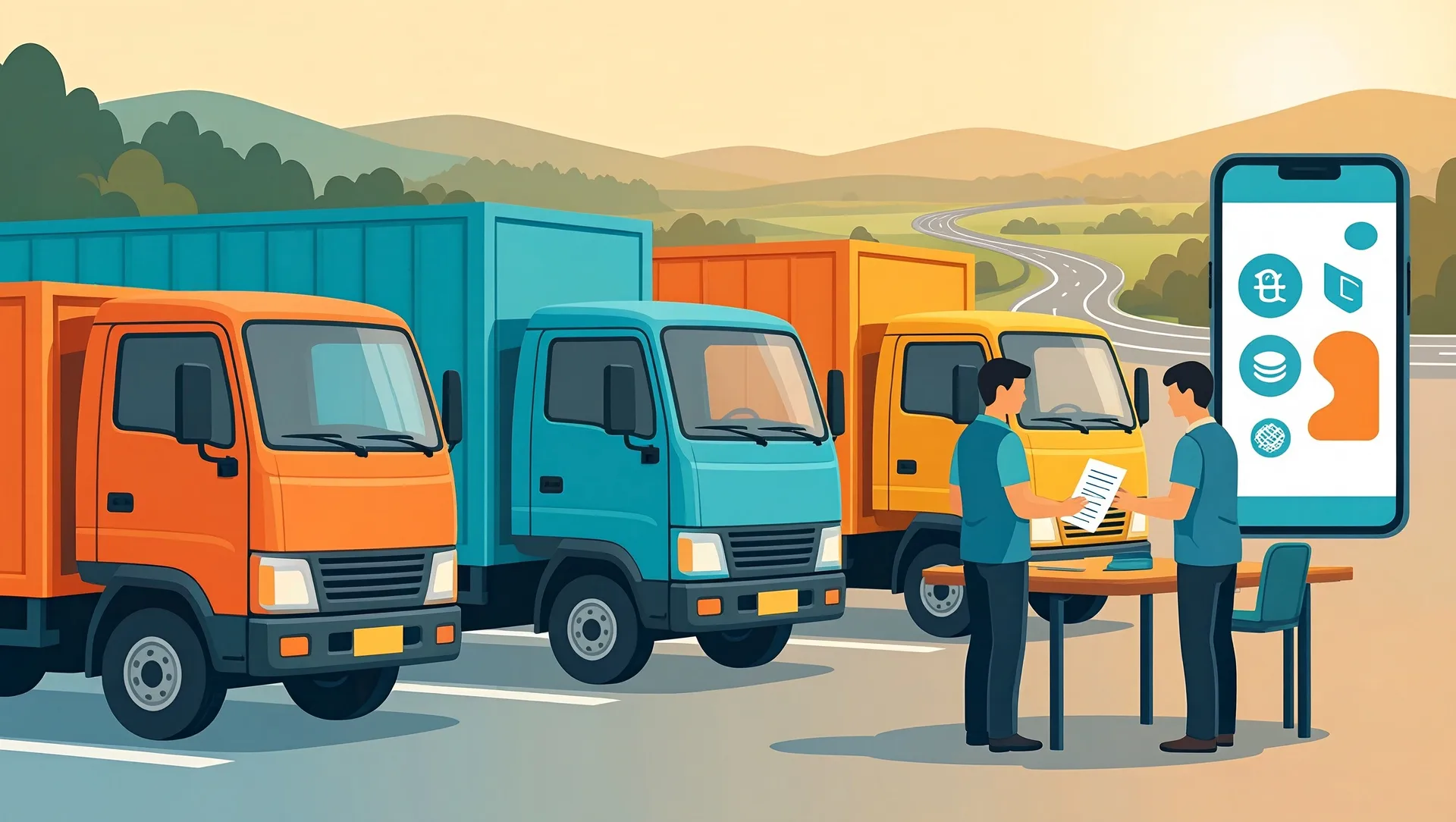
A driver leaves for Jakarta with Rp 3.5 million in uang jalan. Four days later he comes back with a handful of crumpled receipts. A few more are photos somewhere in a WhatsApp group, and some costs are only in his memory. Your admin spends an afternoon trying to make the numbers add up, and the driver is already loading for the next trip. Multiply that by 15 trucks and you get a monthly report that shows total revenue but not which trucks, routes or customers actually earn money. Trip cost tracking for trucking business owners does not need to be complicated. It means one record per trip, filled in the same way every time. This post explains what to record, how to settle every advance quickly, and what tools fit a business with 5 to 30 trucks.
Why cash advances and WhatsApp photos leak money
Most small expedition businesses run on trust and cash, and that works up to a point. Past roughly five trucks, a few problems start to cost real money:
- Settlement drags on. When a driver starts a new trip before the last one is settled, advances pile up. After a month nobody is sure who owes whom.
- Costs without receipts. Retribusi, parking, weighbridge fees and tips for loading crews often come without a receipt. If there is no agreed amount, every settlement becomes a negotiation.
- Costs are not linked to the trip. A fuel receipt in a chat group says nothing about which truck, which customer or which route it belongs to.
- Admin time. A business with 12 trucks doing about 60 trips a month can easily lose two or three admin days a month chasing receipts.
The bigger loss is hidden. Without trip-level numbers, you might keep a customer who looks good on revenue but loses money once waiting time and empty return trips are counted.
What one trip record should contain
Think of each trip as a small job with its own income and costs. Keep the record short enough that a driver or admin can fill it in within a few minutes.
Trip header
Date, truck plate number, driver (and kernet, if any), customer, route, cargo and the agreed freight rate. This is the line everything else hangs on.
Advance given
How much uang jalan was given, when, and whether it was cash or transfer. If you top up during the trip, record each top-up as a separate line.
Costs by category
- Fuel: liters, amount, and odometer reading at each fill-up.
- Tolls: ideally from a company e-toll card assigned to that truck.
- Retribusi, parking, weighbridge: actual amount or a fixed amount agreed per route.
- Loading and unloading fees: who was paid and why.
- Meals and lodging: only if these are not already covered by a fixed daily allowance.
- Small repairs on the road: a tire patch, a replaced hose.
Proof
Attach the receipt photo to the cost line itself, not to a chat message. For costs that never come with a receipt, agree on a fixed amount per route in advance. That way you only discuss the exceptions.
Settle every driver's uang jalan within a day
The goal is simple: when a truck comes back, the trip is closed the same day or the next. Here is a process that works for most small fleets:
- Set a standard budget per route. For example, Surabaya to Jakarta: fuel, tolls, retribusi, loading fees and meals, each with an expected amount. This becomes the uang jalan template. The figures are your own, based on the last few months of real trips.
- Record costs during the trip. The driver fills in a short phone form and snaps the receipt. If he is not comfortable with that, he hands the receipts in when he returns and the admin enters them.
- Compare against the template. The admin only looks closely at items that differ by more than an agreed margin, for example 10%. Everything else is approved.
- Close the balance. The driver returns the remaining cash, or the company pays the shortfall. Both sides confirm, and the trip is marked settled.
- One open trip per driver. No new advance until the previous trip is settled. This single rule prevents most of the mess.
Two habits make this much easier. First, give each truck its own e-toll card so tolls can be checked from the card history instead of receipts. Second, track fuel against distance. If a truck usually does about 4 km per liter on a route and suddenly drops to 3, you have a mechanical problem, a driving problem or a receipt problem. Each one is worth finding.
See which trucks, routes and customers make money
Once trips are recorded consistently, the profit picture comes almost for free.
Trip profit is the freight rate minus direct trip costs: fuel, tolls, retribusi, loading fees, meals and driver trip commission. Truck profit per month is the sum of its trip profits minus its fixed costs: installment, insurance, vehicle tax, KIR, driver base salary and maintenance.
With three months of data, owners usually discover things like:
- A route that looks well paid but has high tolls and long loading waits, so it earns less per day than a shorter route.
- A customer that pays a good rate but almost always means an empty return trip.
- A truck whose fuel and repair costs make it barely profitable, which changes the decision between repairing it and replacing it.
- Drivers who consistently come in under budget and deserve recognition.
Profit per day is often more useful than profit per trip. A trip that earns Rp 2 million over four days is worse than one that earns Rp 1.5 million in two.
Tools and realistic costs: start simple
Spreadsheet and form
Google Sheets plus a Google Form for drivers costs nothing and is enough for 5 to 10 trucks. The weak points are discipline and photos, which end up in a separate folder. Use this to prove your process first.
Ready-made fleet or expense apps
These usually charge a monthly fee per truck or per user. Check whether they handle uang jalan advances, retribusi without receipts and settlement the way you work, because many are designed for other markets.
A simple custom app
A driver form on the phone, an admin settlement screen and profit reports per truck, route and customer. For a small fleet this typically costs somewhere in the range of Rp 25 to 80 million depending on scope, and takes about 4 to 10 weeks. It is worth it when the spreadsheet process already works and you are outgrowing it, or when you want to connect it to invoicing or GPS later. It is not worth it if your routes and budgets are still undefined.
Whatever you choose, keep the driver side very simple. Fewer fields, big buttons, photo upload, and the option for admin to enter data on the driver's behalf.
Next step: pick your three busiest routes, write a uang jalan template for each one, and run every trip through a simple sheet for one month. You will know quickly where the money goes. If you then want a tool built around your own process, CodeWorks can help you scope it, starting from what already works in your spreadsheet.