·3 min read
QRIS, Marketplaces and Your Back Office: Getting Payments, Orders and Stock Into One System
Selling through a shop, a website and several marketplaces while accepting QRIS usually means orders, payments and stock live in separate apps. Here is what one system looks like and how to get there in phases.
- integration
- qris
- marketplace
- inventory
- sme
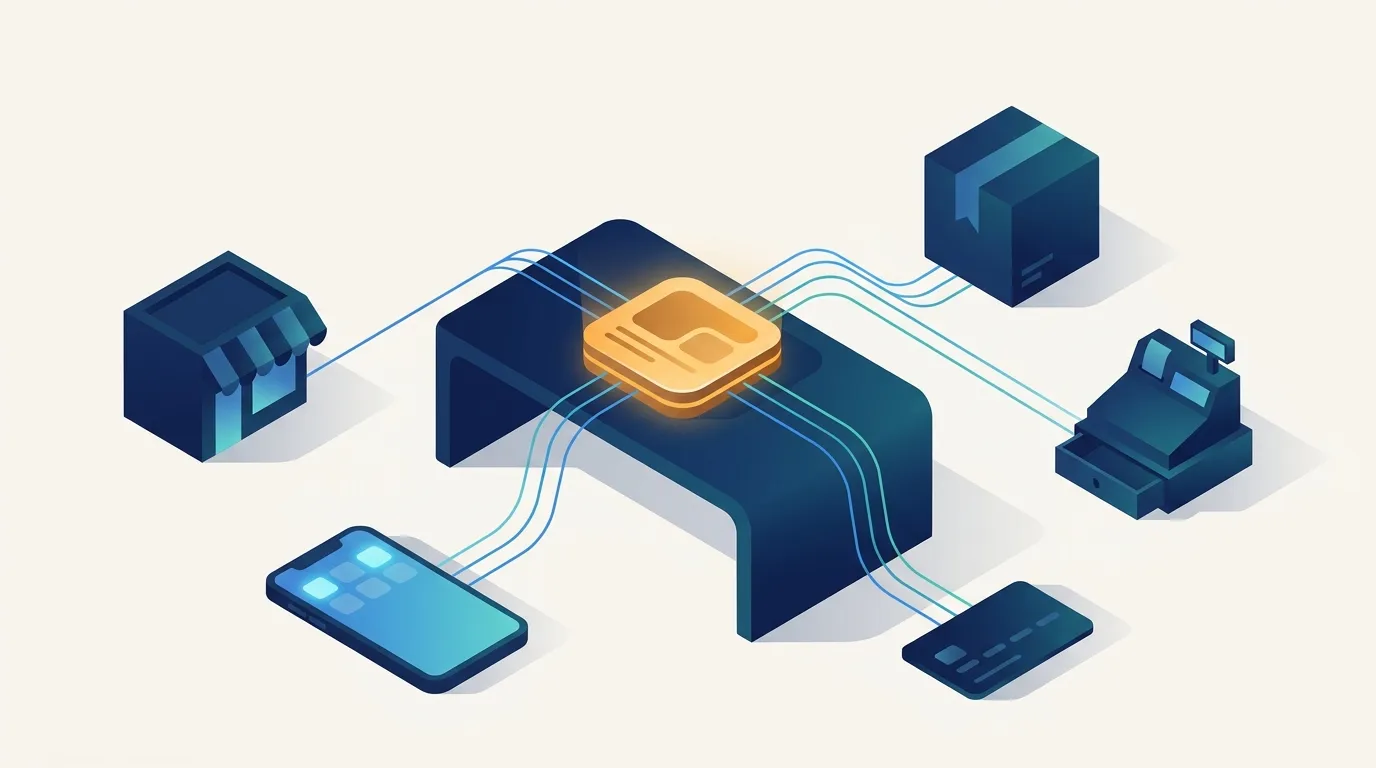
A typical Indonesian retail or F&B business now sells in more places than it did a few years ago: a physical shop, its own website, storefronts on Tokopedia, Shopee and TikTok Shop, plus WhatsApp orders. Customers pay by QRIS, transfer, cash, or a marketplace wallet. The trouble starts when you try to see the whole business at once.
The pain of separate apps
When orders, payments and stock each live in their own app, the gaps are filled by people and spreadsheets:
- Double entry. A marketplace order is copied by hand into a stock sheet, then again into the accounting file. Every copy is a chance for a typo or a missed line.
- Oversold stock. The last unit sells in the shop and on a marketplace within the same hour because neither channel knew about the other. The result is a cancellation, a refund and a lower rating.
- Slow reconciliation. At month end, someone matches QRIS settlement reports, marketplace payouts and bank statements against sales by hand. Fees, partial refunds and late settlements make the numbers refuse to agree.
What "one system" actually means
One system does not mean replacing every tool with a single giant application. It means one place that is the source of truth for three things:
- Orders, whichever channel they came from.
- Stock, with one quantity per SKU that every channel reads and updates.
- The ledger, where each sale, fee, refund and settlement is recorded.
Around that core sit integrations: connectors that pull data in from marketplaces, the payment gateway and the POS, and push stock levels and order status back out. The back office stops depending on copy-and-paste.
This is the model behind full ERP products such as our Legacy ERP, which covers Sales, Inventory, Purchases, Finance and CRM across several verticals. Not every SME needs that breadth on day one, but the principle is the same: one order record, one stock count, one ledger.
Common integration points
Marketplace APIs
Tokopedia, Shopee and TikTok Shop each offer seller APIs for pulling orders and pushing stock and price updates. The details differ per platform and change over time, so each connector needs ongoing maintenance.
Payment gateway and QRIS settlement
QRIS payments arrive through whichever acquirer or gateway you use. Most provide settlement reports and often a webhook for payment notifications. The integration's job is to match each settlement line to an order and record the fee, so reconciliation becomes a report instead of a chore.
POS and accounting
Shop sales must reduce stock in the same central count the online channels use, via the POS's API, a scheduled export, or a POS screen inside the central system. The ledger then syncs summarised transactions to your accounting software.
Your own storefront
A direct-to-consumer site, such as the Originale store we built, should read stock from the same source as every other channel.
Getting there in phases
Connecting everything at once is the fastest way to stall. A phased plan works better:
- Find the biggest leak. Oversold stock, hours lost to reconciliation, or orders slipping through? Measure it so you know what "better" looks like.
- Fix the central record first. Set up one order, stock and ledger model, even if early data still arrives by import.
- Connect the highest-volume channel. One marketplace properly integrated teaches you more than three half-connected ones.
- Automate settlement matching. Bring in payment and payout reports and let the system do the matching.
- Add the rest, one at a time: remaining channels, POS, accounting sync, dashboards.
What to ask a developer
- Which marketplace and payment integrations have they actually built, and how do they handle API changes after launch?
- How are stock conflicts resolved when two channels sell the same unit seconds apart?
- What happens when an integration fails overnight? Is anyone alerted, and does the system catch up on its own?
- Can reconciliation handle fees, partial refunds and split settlements, and who owns the data and code afterwards?
If orders, payments and stock are spread across apps and spreadsheets in your business, we can help you map the integration points and plan the first phase. Get in touch with CodeWorks to talk it through.