·6 min read
Digital Proof of Delivery for Distributors: Settle Disputes Fast and Invoice the Same Day
Paper surat jalan lead to lost signatures, late corrections and delivery disputes that hold up your invoices. Here is how a simple mobile proof of delivery lets you settle disputes in minutes and invoice the same day.
- proof of delivery
- surat jalan
- delivery disputes
- distribution
- driver app
- goods returns
- invoicing
- sme
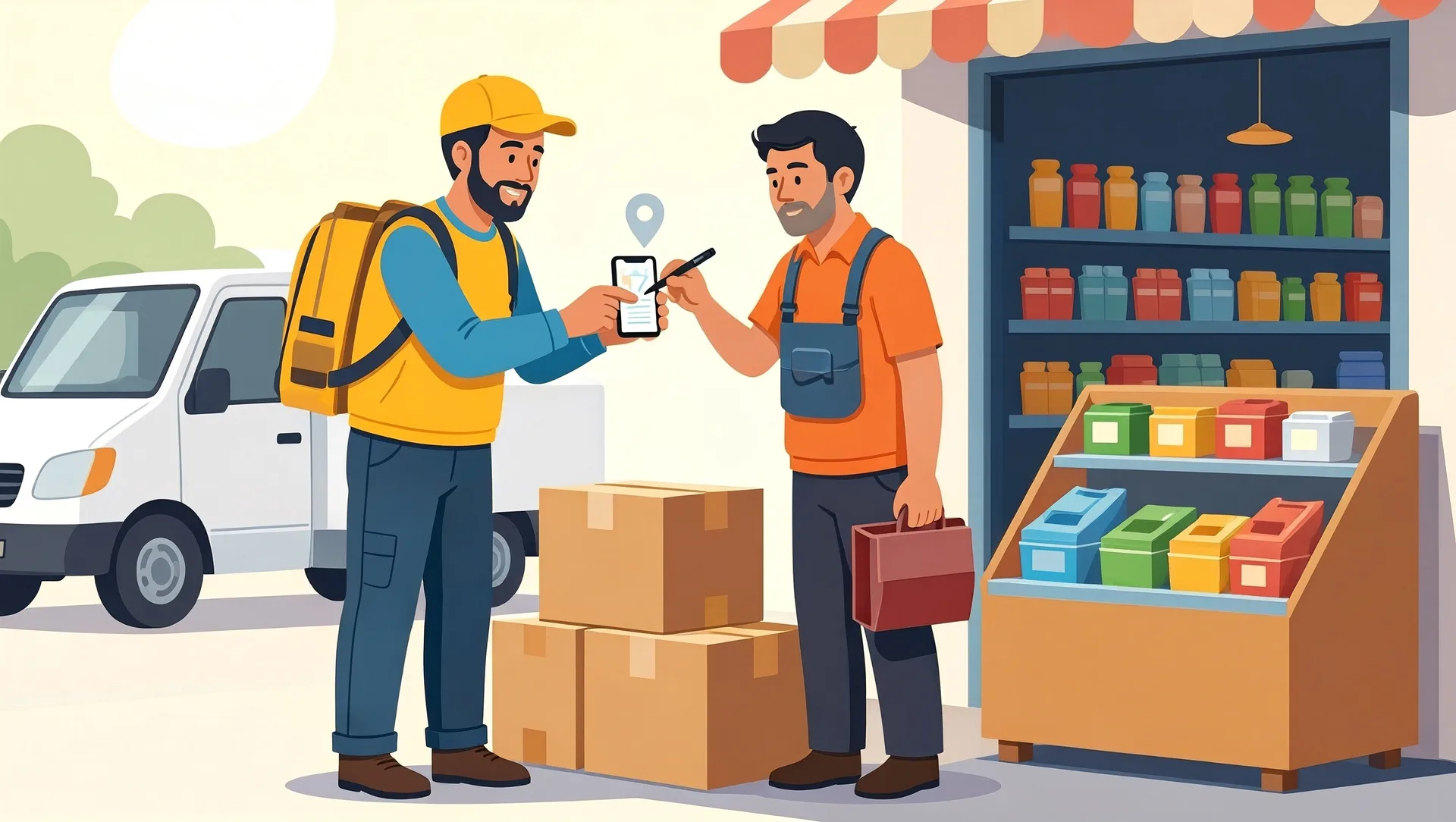
If you run a distribution business with your own trucks and drivers, you know the routine. The driver comes back in the evening with a stack of surat jalan: some signed, some smudged, one missing. Two weeks later a store calls to say they only received 8 cartons, not 10. Finance holds the invoice, sales argues with the store, and nobody can prove what happened at the door. A digital proof of delivery for distributors fixes this with something simple. The driver records the signature, a photo, the GPS location and time, and any short or rejected items on a phone, right at the customer's door.
This article explains what that looks like in practice, what it roughly costs, and where it can go wrong.
Why paper surat jalan slows down your cash
Paper surat jalan have worked for decades, so it is fair to ask why you should change. The paper itself is not the problem. The trouble starts after the delivery.
- Invoices wait for the paper. Most distributors only invoice once the signed surat jalan is back in the office. If the driver returns late, or the admin enters it the next day, every invoice slips by one to three days.
- Corrections happen too late. When a store rejects two cartons because they are dented, the driver writes it in the margin, if he remembers. The admin may miss it, so the invoice goes out for the full amount and the store refuses to pay.
- Disputes rely on memory. When a claim arrives weeks later, you have a scribble that could be anyone's signature and a driver who has done 300 drops since.
- Paper gets lost. Rain, a hot dashboard, a missing folder. One lost surat jalan for a large order can leave millions of rupiah stuck in receivables.
Each problem is small on its own. Together they add days to your collection time and cost your team hours every week chasing paperwork instead of selling.
What a digital proof of delivery for distributors records
A good proof of delivery app is not complicated. It captures four things at the moment of handover.
1. Signature and recipient name
The recipient signs on the driver's phone, and the driver types or selects their name and role, for example Bu Rina, cashier. A signature with a name and role is far more useful than a scribble on carbon paper.
2. Photo of the goods
The driver takes one or two photos of the goods at the drop point, ideally with the store front or stock room visible. This settles most we never received it claims instantly.
3. GPS location and timestamp
The phone stamps the exact time and location automatically, and the driver cannot edit them. You can see that the delivery happened at 10:42 at the store's address, not at 16:00 somewhere else.
4. Short, damaged or rejected items
This is the part most distributors underestimate. Before the customer signs, the driver goes through the item list on screen and marks anything short, damaged or refused, with a reason and a photo. The customer signs for what they actually accepted, and rejected goods are recorded as returns on the truck.
How a delivery works day to day
- In the morning, the admin assigns orders to each driver. The orders appear on the driver's phone in route order.
- At each stop, the driver opens the order and checks the items together with the store staff.
- Any differences are recorded, for example: 2 cartons of cooking oil 1L dented, rejected.
- The recipient signs and the driver takes the photo. The app saves the GPS location and time.
- The driver taps Delivered. With signal, the data reaches the office within seconds. Without signal, the phone stores it and sends it as soon as signal returns.
- In the office, the invoice is created or adjusted based on the accepted quantity and can be sent the same day by WhatsApp or email.
When the truck comes back, the warehouse already knows which returned goods to expect, so checking in returns takes minutes instead of turning into an argument.
Settling a dispute in minutes
Here is a typical case. A grocery store in Bekasi calls your sales rep: your invoice says 10 cartons, but they say they only got 8. With paper, this becomes a week of phone calls.
With digital proof of delivery, your admin opens the record while still on the phone. It shows 10 cartons accepted, signed by Pak Hendra at 10:42, with a photo of 10 cartons in front of the store and GPS at the store's address. The admin sends the photo by WhatsApp. More often than not, the store finds the missing cartons in its own stock room.
It works the other way too. Sometimes the record shows the driver noted 2 rejected cartons and the invoice still charged for 10. That is your mistake. Now you see it immediately and send a correction before it damages the relationship.
Proof of delivery does not make you right every time. It makes the facts clear quickly, which is what both sides actually want.
Costs, options and honest trade-offs
Ready-made app or custom build
Ready-made delivery apps usually charge a monthly fee per driver or per vehicle, often somewhere around Rp 100.000 to Rp 300.000 per driver per month depending on features. They are quick to start and fine if you only need signature, photo and GPS. Their usual limitation is integration. If they do not connect to your accounting or ordering system, your admin still retypes quantities and returns.
A custom app built around your existing system costs more up front. For a typical SME distributor, a focused proof of delivery app connected to your orders and invoices very roughly falls in the Rp 50 to 150 million range, mainly depending on how many systems it must connect to. The payoff is that accepted quantities flow straight into the invoice with no retyping. Always ask for a quote based on your actual workflow.
What can go wrong
- Drivers' phones. Old phones with full storage cause crashes and lost photos. Budget for a basic Android phone per driver, or set clear minimum requirements.
- Weak signal. Rural routes and basement loading areas are common. Offline mode is essential.
- Driver resistance. Some drivers feel watched. Explain that the record also protects them when a store wrongly blames them for missing goods.
- Customer requirements. Modern trade chains often still require a stamped paper surat jalan. Keep paper for those customers and go digital for the rest.
Start small
Run a pilot with two or three drivers on one route for a month. Measure two things: the number of days between delivery and invoice, and the number of disputes. Those two numbers tell you whether a full rollout is worth it.
Your next step
Before you talk to any vendor, look back at the last three months. Count the disputed deliveries, the invoices delayed while waiting for surat jalan, and the amount still stuck in receivables because of them. If the total is bigger than you expected, it is worth a conversation. CodeWorks can review your current delivery and invoicing flow and tell you honestly whether a ready-made app is enough or a custom build makes sense.