·6 min read
Cashier Shift Closing and Cash Reconciliation for Multi-Outlet Shops: Catch Shortages Before They Become Habits
When the POS report and the money in the bank never quite match, the problem is usually the routine, not the software. Here is a practical shift closing and reconciliation routine that traces every difference to a specific shift and cashier.
- cash reconciliation
- shift closing
- cashier
- pos
- selisih kas
- retail
- multi-outlet
- sme
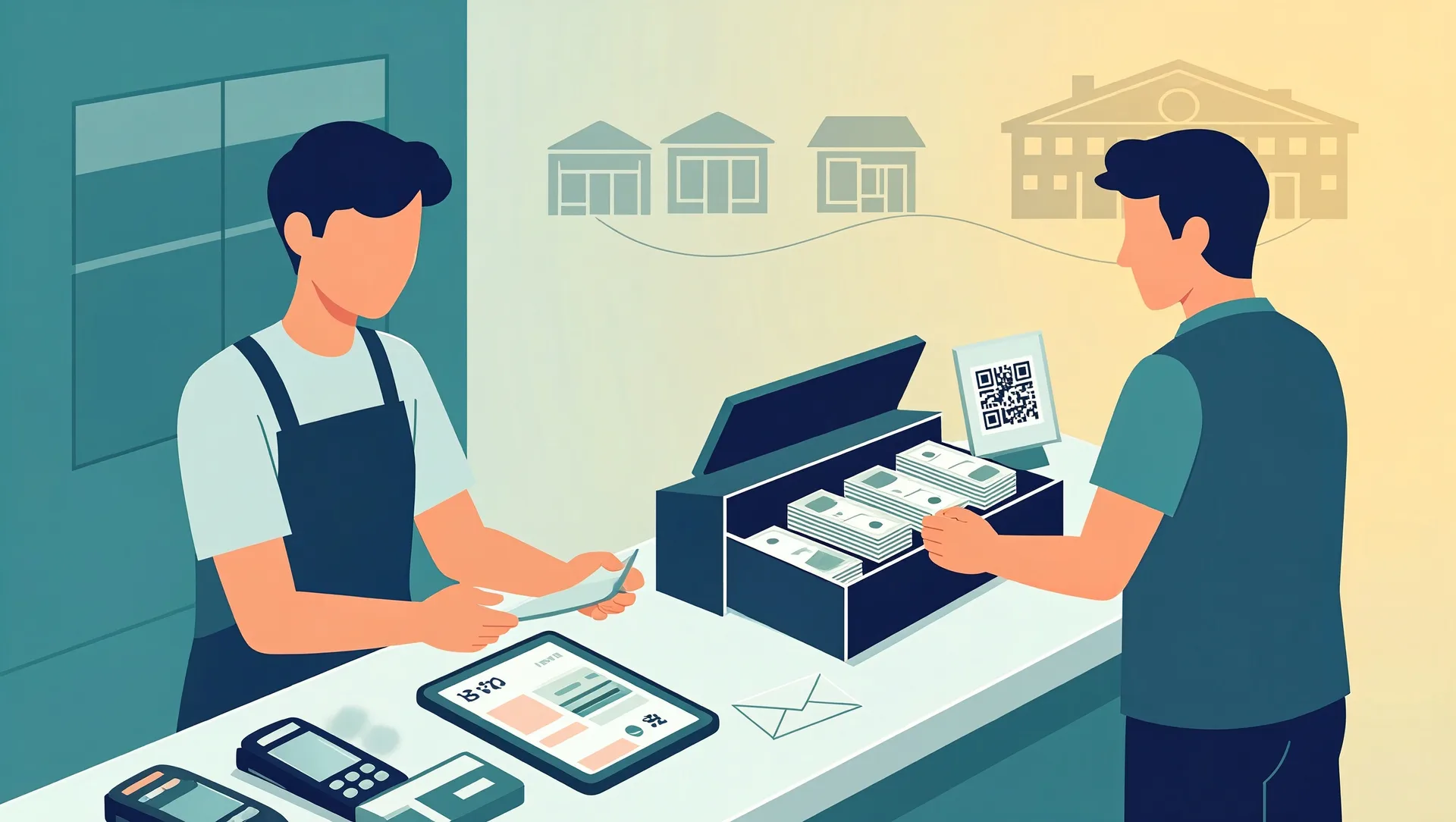
You run three outlets. The POS says yesterday's sales were Rp18.4 million, but when you add up the cash deposits, QRIS settlements and card payouts in the bank, you get Rp18.1 million. Nobody knows where the Rp300,000 went, so it gets written off as a cost of doing business. Then it happens again next week. A proper cashier shift closing cash reconciliation routine fixes this, not by accusing anyone, but by making every rupiah traceable to one shift, one drawer and one person.
This guide is for owners of minimarkets, cafes, retail shops and other multi-outlet businesses. You do not need new software to start. Most of it is discipline, a few simple rules and a daily habit of checking the bank.
Why the gaps keep appearing
Small differences rarely come from one big theft. They come from a mix of ordinary problems that nobody separates:
- Wrong change given during a busy lunch rush.
- Payment method mix-ups, for example a QRIS payment recorded in the POS as cash, so the drawer looks short while the bank looks long.
- Unclear starting cash, where nobody is sure whether the drawer started with Rp500,000 or Rp300,000.
- Fees and timing: QRIS and card money arrives a day later, minus the provider's fee, so it never matches the POS total exactly.
- Shared drawers, where two cashiers use one drawer and nobody can say whose mistake it was.
When all of these land in one daily number, you cannot fix any of them. The goal is to split the problem into pieces small enough to explain.
Set the rules before the shift starts
Fixed starting cash (modal kasir)
Every drawer starts each shift with the same fixed amount, for example Rp500,000, in a set mix of small notes and coins. The supervisor counts it, the cashier counts it again, and both sign or confirm it in the POS. If the amount changes, it should be a decision, not an accident.
One cashier, one drawer, one login
Each cashier logs in with their own account and owns one drawer for the whole shift. If a second person must cover a break, either they count the drawer together first, or the break cover uses no cash. Shared logins are the single biggest reason shortages cannot be traced.
Cash drops during the shift
If a drawer goes above a set limit, say Rp2 million, the supervisor removes the excess into the safe and both record the amount. Less cash in the drawer means less risk and an easier count at closing.
A cashier shift closing cash reconciliation routine, step by step
- Close the shift in the POS so no more sales can go into it.
- Blind count the cash. The cashier counts the drawer and enters the amount without seeing what the POS expects. This matters: if cashiers see the expected figure first, counts mysteriously come out perfect and real problems stay hidden. Most POS apps such as Moka, Majoo or Pawoon have a shift closing feature that can hide the expected amount; check your settings.
- Subtract the starting cash. What remains is the cash sales for that shift.
- Split the non-cash totals separately: QRIS, EDC card (debit and credit), and any other e-wallet or delivery app payments such as GoFood or GrabFood. Print or screenshot the EDC settlement for that shift and compare it with the POS card total.
- Record the difference for each method, not just one overall number. A Rp150,000 cash shortage alongside a Rp150,000 QRIS surplus is almost always a wrong button pressed, not missing money.
- Hand over or deposit. At a shift change, the incoming cashier receives a freshly counted starting drawer. Takings go into a sealed envelope or safe, labelled with outlet, date, shift and cashier name.
With practice this takes 10 to 15 minutes. It feels slow at first, but it is far cheaper than an unexplained loss every week.
Handling differences without drama
Some difference is normal. What matters is having clear, written thresholds so supervisors do not decide case by case:
- Small differences, for example under Rp10,000: recorded and approved by the supervisor as a write-off. No further action.
- Medium differences, for example Rp10,000 to Rp100,000: the supervisor checks transactions for that shift for wrong payment methods, voids or refunds, and writes a short note explaining the cause.
- Large or repeated differences: escalated to the owner or area manager. Review voids, discounts and refunds by that cashier and, if available, CCTV footage at the time of the transaction.
Track differences per cashier over a month. One cashier being Rp20,000 short once is noise. The same cashier being short on 9 of 20 shifts is a pattern that needs a conversation, more training or a closer look. Decide in advance, and in writing, whether and when shortages are deducted from pay, and make sure it complies with your employment agreements. Surprise deductions destroy trust faster than shortages do.
Matching outlet deposits to the bank
Shift closing tells you what should reach the bank. Bank matching tells you whether it did. Do this daily, or at least every two or three days, while memories are fresh.
Make deposits identifiable
Each outlet deposits its cash daily. Put the outlet code and date in the transfer or deposit note, for example OUT2-0514, and keep a photo of the deposit slip. Some owners give each outlet a separate bank account or virtual account, which makes matching much easier.
Expect timing and fees for non-cash
QRIS and card money usually lands the next working day, after the provider's fee is deducted. Do not expect it to match the POS to the rupiah. Instead, check that each day's settlement equals the POS total minus the expected fee. If the fee looks wrong, or a day is missing, contact the provider quickly.
Use a simple matching sheet
A spreadsheet with one row per outlet per day works well: POS cash, counted cash, deposit received, POS QRIS, QRIS settled, POS card, card settled, and a difference column for each. Anything that does not clear within three days gets investigated. Once you have more than five or six outlets, this is where a small custom dashboard that pulls POS and bank data automatically starts to pay off; for a typical SME it costs roughly Rp15 to 40 million to build, depending on how many systems it connects to.
Start this week
You do not need to roll everything out at once. This week, fix the starting cash amount, stop shared logins and turn on blind counts in your POS. Next week, add the per-method split and the matching sheet. Within a month you will know which outlet, which shift and which payment method your gaps come from, and most of them will start shrinking simply because people know they are being counted.
If your POS and bank data live in separate places and matching them by hand is eating your evenings, CodeWorks can help you connect them into one daily report. Get in touch and tell us how many outlets and which POS you use.