·6 min read
Business Permit Renewal Tracking for SMEs: Never Miss a Halal Certificate, KIR or Izin Edar Renewal Again
An expired KIR or izin edar can stop deliveries and sales overnight. Here is how to build one register with owners, staged reminders and renewal checklists so it never happens to you.
- permit renewal
- license tracking
- document management
- halal certificate
- kir
- renewal reminders
- compliance
- sme
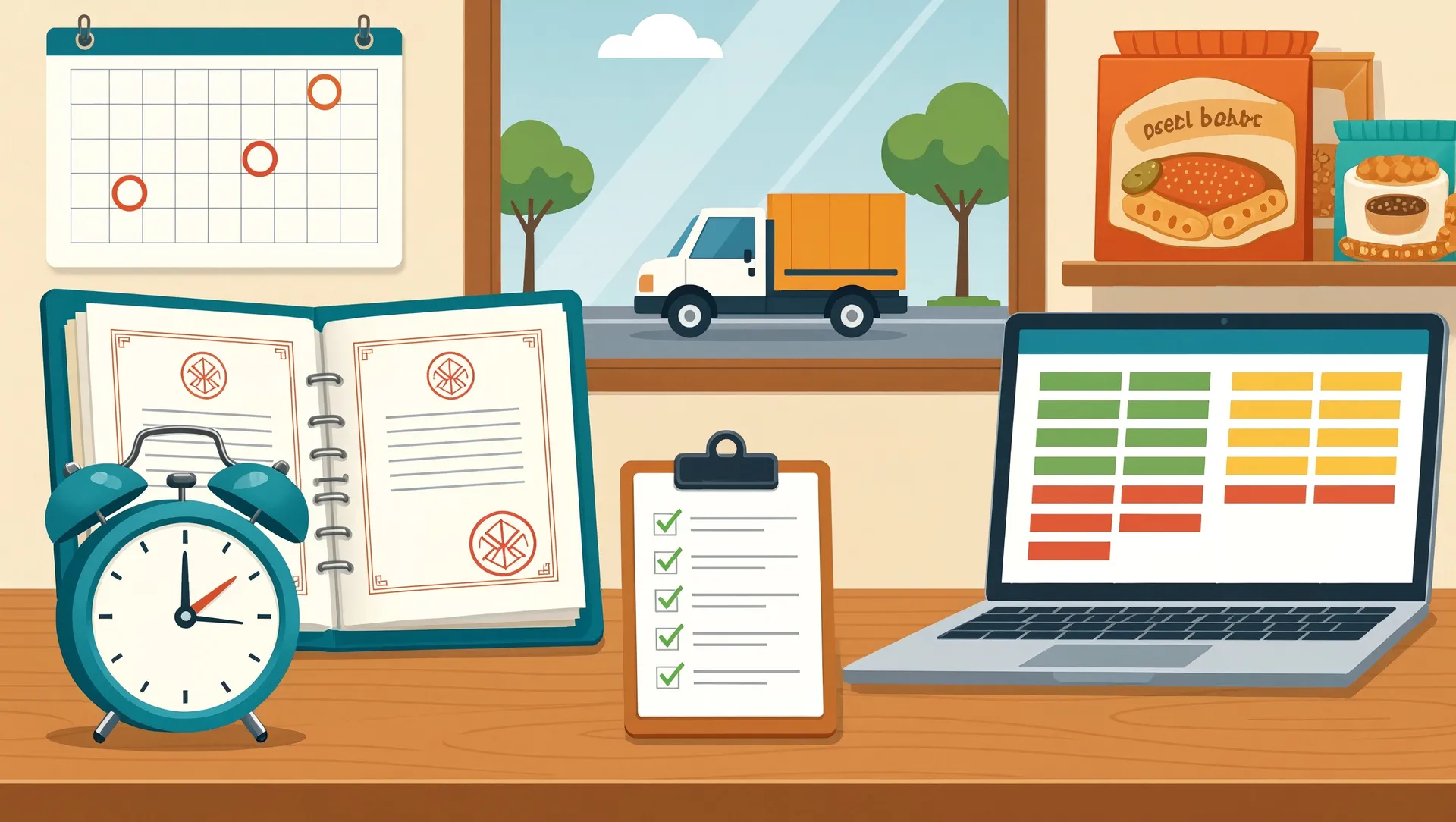
A delivery truck gets stopped at a roadside inspection because its KIR expired two weeks ago. A modern-trade buyer holds your purchase order because the izin edar for one of your products has lapsed. A tender you spent a month preparing is rejected because one supporting document was out of date. None of these are rare. Almost all of them have the same cause: the business relies on someone's memory or on a spreadsheet nobody opens. This post shows how to set up business permit renewal tracking that a small team can actually keep running. You need one register, a named owner for every item, staged reminders and a checklist for each renewal.
Why memory and the forgotten spreadsheet fail
Most owners know their permits matter. The problem is timing. Many documents renew only every few years. By the time one comes due, the person who handled it last time may have left. The login to the government portal may be lost. Nobody remembers that the renewal needed a lab test that takes three weeks.
The spreadsheet fails for a different reason: it is passive. A list of dates does nothing on its own. If nobody is assigned to check it and nothing reminds anyone, it is just a record of what you are about to miss.
The real cost of a lapse is rarely the fine. It is the trucks parked in the yard and the stock a distributor refuses to accept. It is the outlet that cannot operate, and the rush fee you pay an agent to fix it quickly.
What business permit renewal tracking should cover
Start by listing everything your sales, deliveries and premises depend on. For a typical Indonesian SME, that includes the following.
Product permits
- BPOM izin edar (MD/ML): generally valid for five years. Start the renewal well before the expiry date, not in the final month.
- SPP-IRT for home-industry food products, which also has a validity period you need to record.
- Halal certificate: check the terms on your own certificate. Under current BPJPH rules, a certificate generally stays valid as long as your ingredients and production process do not change. So the real risk is a change, such as switching the supplier of one ingredient, not a date on the calendar.
Vehicles
- KIR (periodic roadworthiness test) for goods vehicles, due every six months.
- STNK: you pay the vehicle tax every year, and the plate and STNK are replaced every five years.
Premises and contracts
- SLO (electrical installation certificate): record the validity period printed on your certificate, because it depends on the type of installation.
- Shop and warehouse leases: record the end date and also the notice period for renewal or renegotiation.
- Vendor and customer contracts: especially those that auto-renew, or that a buyer requires to be current before it issues orders.
Also include documents that do not expire but must be updated when something changes. One example is your NIB data in OSS after you move address or add a new business line. Use a simple rule: if a document would cause a problem by being wrong or out of date, it belongs in the register.
Build one register with the right columns
You can build this in Google Sheets in one afternoon. Use one row per document, per location or vehicle. If you run three outlets, that means three rows for three leases, not one row that says 'leases'. Recommended columns:
- Document and what it covers, for example: KIR, truck B 9123 XYZ.
- Issuing body and portal, for example: Dishub, BPOM e-registration, OSS.
- Document number and expiry date. For a document like the halal certificate, write the trigger instead, such as 'any change of ingredient or supplier'.
- Lead time: how many days the renewal realistically takes, including time to prepare the paperwork.
- Owner: one named person, not a department.
- Backup: who takes over if the owner is on leave or resigns.
- Links to the scanned document and to its renewal checklist.
- Status: valid, renewal in progress, or expired.
Add a column that calculates the days remaining, and colour it green, yellow or red. That one visual turns a passive list into something people actually glance at.
Assign owners, stage reminders and write checklists
One owner per item
'Admin will handle it' is how things get missed. The owner does not have to do every step personally. They are responsible for making sure the renewal gets done and for updating the register afterwards.
Staged reminders
A single reminder on the expiry date is too late. Base your reminders on lead time:
- First reminder: lead time plus a buffer. For a BPOM renewal, that may be three to six months ahead. For KIR, three to four weeks is usually enough.
- Second reminder: halfway through, to confirm the process has actually started.
- Final reminder: about a week before expiry, with the business owner copied in.
Copying the business owner on the last reminder is an escalation. If an item reaches that point and nothing is in progress, the boss should know while there is still time to act. Also schedule a 15-minute monthly review. Open the register, check anything yellow or red, and confirm that every owner still works at the company.
A checklist for each document type
The second renewal should be easier than the first, but only if someone writes the steps down. Here is an example checklist for KIR:
- Book a test slot at the Dishub testing unit.
- Service the truck first: brakes, lights, tyres and emissions.
- Prepare the STNK, the previous KIR card and the payment.
- After the truck passes, upload a scan of the new card and update the expiry date in the register.
For halal, the checklist is about changes. Before anyone switches an ingredient supplier or adjusts a recipe, the halal supervisor checks whether the change must be reported. For leases, it is about negotiation. Review the rent, compare alternatives and decide before the notice period opens.
Tools and what they realistically cost
- Shared spreadsheet plus calendar reminders: free. Works for up to a few dozen items if one person maintains it reliably.
- Spreadsheet with automatic email or WhatsApp alerts through simple scripts or no-code tools: low cost and a few hours to set up. It is fragile, though, if nobody understands how it was built.
- A small custom internal tool: worth considering when you manage many vehicles, outlets or products, need a history of who did what, or want reminders sent automatically to the right person. Expect a budget in the tens of millions of rupiah depending on scope. If you use the official WhatsApp Business API, there are also per-message fees.
Be honest about where you are. Most small businesses should start with the spreadsheet. Build software only once the process works and the volume makes manual tracking genuinely painful.
Your next step: this week, collect every permit, certificate and contract into one shared folder. Then fill in the register and assign an owner to each row. Most businesses find at least one document that has already expired or is about to. If you outgrow the spreadsheet and want reminders that run themselves, CodeWorks can help you scope a simple tool that fits how your team already works.